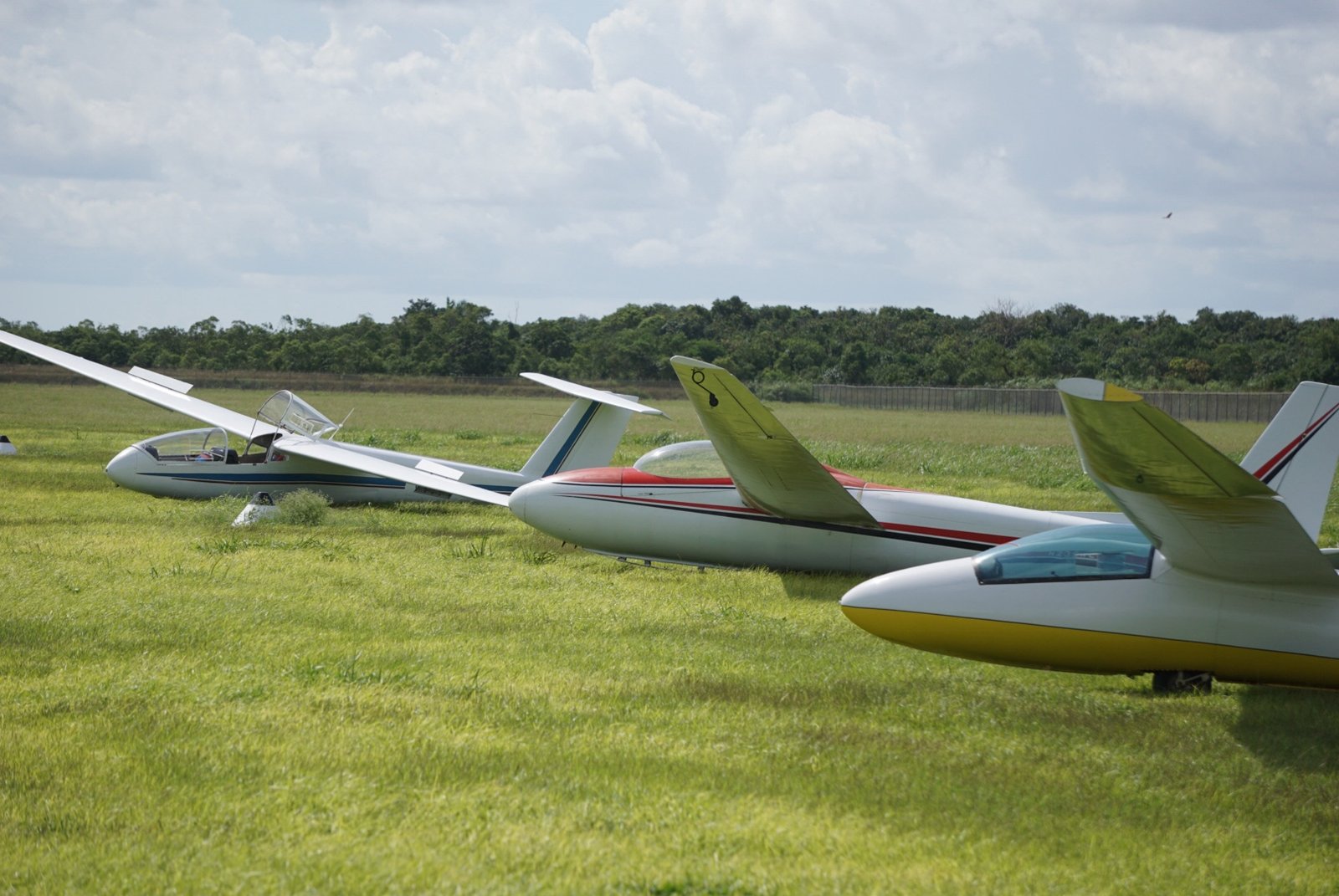
Learn to Fly Gliders
Physiology
Gliders keep the paperwork light: no FAA medical certificate required. You do need to be healthy enough to fly safely, and there is a 242 lb maximum weight per person. No minimum age to start lessons either, you can solo at 14 and hold the certificate at 16.

Train & Study
You start flying on day one, with home study alongside. The FAA minimum is 10 hours of glider time, at least 20 flights, and 2 hours solo, then the knowledge test and your checkride. Most students happily log more, the flying is the fun part.
Start Soaring
A good pilot never stops learning. Stay current, keep flying, and enjoy your new privileges, rent our gliders and explore South Florida's incredible thermals on your own terms.
FAA Minimums at a Glance
These flight experience minimums apply if you have logged fewer than 40 hours in heavier-than-air aircraft. Already have 40 hours or more? The shorter glider add-on rating path applies instead. These are minimums, not averages: most students log more time before their checkride, and your instructor will sign you off when you are ready, not before.
What Training Actually Looks Like
The questions people ask us most before booking their first glider lesson.
A Typical Lesson
Plan on two to three hours at the field, even though the flying itself is shorter. You start with a briefing on the ground, then preflight the glider alongside your instructor. A towplane pulls you up on an aerotow, you release at altitude, and the rest of the lesson is yours: air work, thermalling, pattern work, or landings, depending on the stage you have reached. Every flight finishes with a debrief and a logbook entry.
Tow height sets how long you stay up, so an early pattern tow is a short circuit while a 3,000 foot tow gives you real time to work. The full rate sheet lists every tow height and rental option, and you can fly more than once in a day when conditions are good.
How Long Does It Take?
The FAA numbers above are a floor, not an average. The biggest factor by far is how often you fly. Students who get out most weekends progress much faster than students who fly once a month, because far less of each lesson is spent recovering ground. South Florida flies year round, so weather is rarely what holds people up.
Written work runs in parallel. You study at home, take the FAA knowledge test when you and your instructor agree you are ready, and then finish with the practical test. Your instructor will tell you honestly where you stand at every lesson, and there is no pressure to rush a checkride.
Already a Powered Pilot?
If you have logged at least 40 hours in airplanes or other heavier-than-air aircraft, you do not need this full course. The glider add-on rating is a much shorter and cheaper path, and it covers the commercial glider add-on too.
Before Your First Lesson
- Age. No minimum to take lessons. You can fly a glider solo at 14 and be issued the certificate at 16.
- Medical. No FAA medical certificate is required to train in or fly a glider. You still need to be in good enough shape to fly safely.
- Weight. There is a 242 lb maximum weight per person.
- English. You must be able to read, speak, write and understand English.
- Bring. Government-issued photo ID, comfortable clothes, closed shoes, sunglasses and a hat. We will get your logbook started.
- Paperwork. Sign the liability waiver before your first flight.
Read the FAQs or get in touch and we will talk you through it.